
Matthews Previous Residents by Era
For a Matthews address, ownership, household, and building evidence begin and end at different times. The Register of Deeds index divides at March 1990, but the historical index reaches back to 1763. Directories can supply a household clue between deed events, and records such as permits or newspaper notices can narrow a date. The table separates what each source can show from what it cannot establish, especially the difference between a recorded owner and a person who lived at an address.
| Source | Years it covers | Where held | What it shows |
|---|---|---|---|
| Modern Register of Deeds | March 1990-present | Mecklenburg Aumentum search | Instrument index and images, parties, dates, legal references |
| Historical Register of Deeds | 1763-February 1990 | Historical site or ROD counter | Grantor-grantee indexes and deed, map, or plat images |
| FamilySearch Mecklenburg catalog | Deed books 1863-1904; general indexes 1865-1982 listing | FamilySearch, CMLibrary Affiliate, or physical access | Early-chain and index aids; image rights vary |
| Verified DigitalNC directories | 1875-76, 1887-88, 1896-97, 1908, 1922, 1935 | DigitalNC / UNC Charlotte | Alphabetic, address, business, and community clues |
| Federal census | 1880-1950 open individual schedules | NARA, Census, library databases | Household relationships, ages, work, and place clues |
| Code Enforcement documents | Last six years stated online | County Code Enforcement | Permit, application, occupancy, and compliance dates |
Use the newest parcel and deed when the address is current. Use plats and legal descriptions when the number disappears. Use directory and census material when the question is who lived there before, not merely who held title. The Town Planning and Town Clerk routes can supply older subdivision or planning files, but their year coverage varies.
Save a Matthews Parcel Snapshot
Begin in POLARIS with the current street address, parcel number, owner, or landmark. Save the parcel ID, owner name, situs address, mailing address, legal description, subdivision or lot, and map date. The county describes those fields as separate pieces of its ownership record. Situs is the physical parcel location. A mailing address is the tax-bill destination and can belong to a person, trust, or office elsewhere.
Check the map's metadata and currentness. County records can lag after an instrument is recorded. The legal description, recorded plat, and deed are the bridge when a present-day street number did not exist. Do not treat a map label, a mailing destination, a tax exemption, or a parcel owner as proof of household membership or present occupancy.
For visual context, Mecklenburg GeoPortal can locate an address or place and display nearby layers. It is a free reference map, not title evidence. The recorded deed and plat control boundaries and title.
Trace Matthews Previous Residents Deeds
The deed chain is a title sequence, not a list of every former household. Start with the current owner as grantee in the modern Register of Deeds index. Record every party role, recording date, book and page or document number, deed type, image link, and legal description. Then search the seller, or grantor, as a grantee to find that person's earlier acquisition. Repeating that handoff moves the chain back one transfer at a time.
- Open the current parcel in POLARIS and copy the legal description with the owner and parcel ID.
- Search the current owner as grantee in the modern ROD index and identify the purchase instrument.
- Record the grantor, date, book and page or document number, deed type, and legal description.
- Search that grantor as a grantee, then repeat the same comparison for the next older transfer.
- When a street search fails, use the subdivision, lot and block, plat reference, old road name, adjoining owners, or metes-and-bounds description.
- Grantor
- The person or entity conveying an interest in the recorded instrument.
- Grantee
- The person or entity receiving that interest in the recorded instrument.
- Chain of title
- The documented sequence of recorded transfers for a parcel or legal description.
- Legal description
- The lot, plat, subdivision, or metes-and-bounds description that identifies land more reliably than an old street number.
The Mecklenburg Register of Deeds Uniform Fee Schedule is the source shown here for current record-copy and land-record service charges.
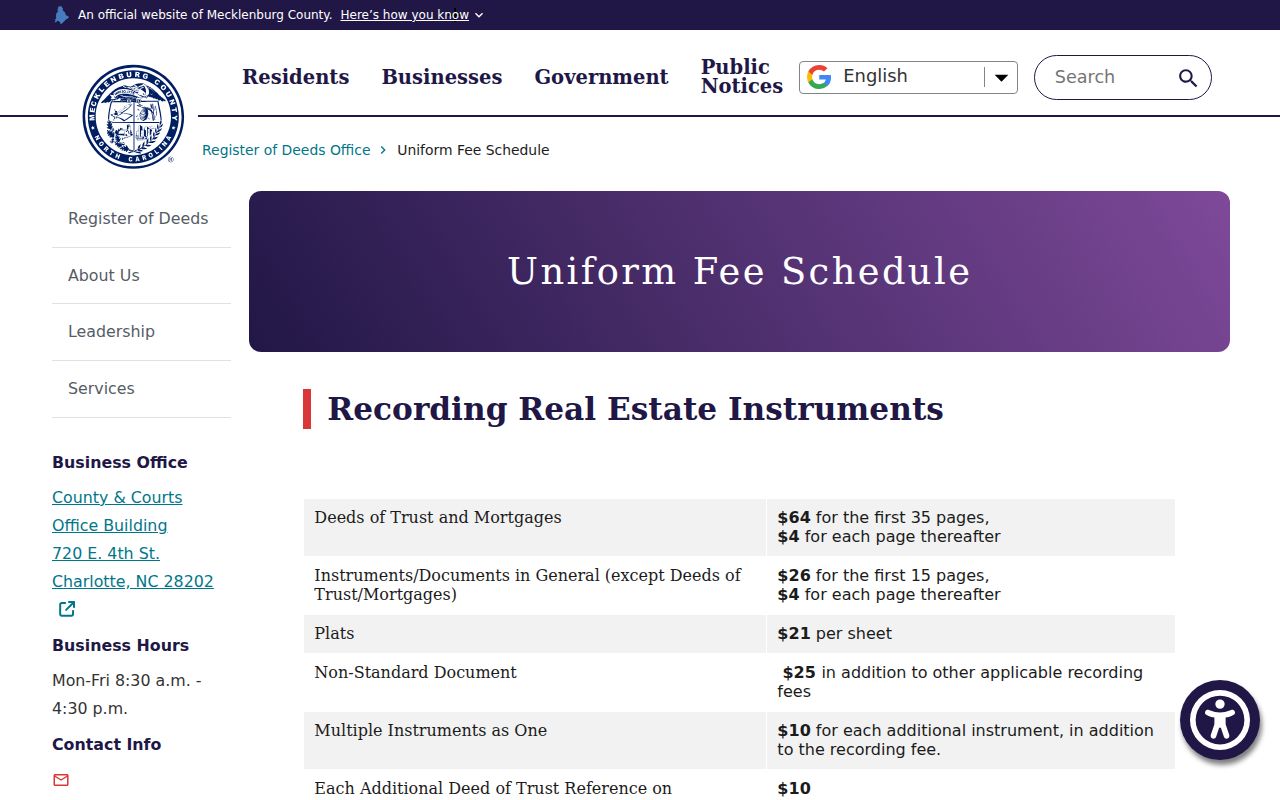
Use the current Uniform Fee Schedule when ordering an instrument or an official copy. Do not rely on a mailed solicitation or an old quoted amount.
Cross Matthews 1990 Deed Divide
The modern search begins in March 1990. Reaching February 1990 is not the end of a Matthews previous residents trail. Move to the historical Mecklenburg ROD index, which covers 1763 through February 1990, then continue the grantor-grantee sequence. The historical service includes deed books, old deeds, maps and plats, condominium and satisfaction books. For missing online results, use the office's book indexes and counter access.
A subdivision may stand on a former farm tract. In that situation, the earlier deed can describe acreage, a metes-and-bounds course, or an adjoining owner rather than the present street number. Compare plat book or map book references with the legal description. A later address match is a hypothesis until the description and recorded instrument connect it.
Note: The 1990 split is an online-index boundary, not a gap in Mecklenburg's historical land-record trail.
Matthews Deed-Book Insider Tip
The historical site offers an Imaging Only book-and-page route in addition to its indexed searching. That matters when a later deed, plat, or family file already supplies a book and page. Enter the known reference first, save the image and citation, then compare the legal description with the parcel snapshot. The research also records specific Beers and Butler plat-book codes, 000A and 000B, which can be useful when a plat reference points to one of those series.
The FamilySearch Mecklenburg deed catalog lists deed books for 1863-1904 and general-index coverage listed for 1865-1982.
Catalog access is a route to a record, not a promise of home-viewable images. Some material requires a FamilySearch account, Center, Affiliate Library, or rights-permitted access point.
Matthews Previous Residents in Directories
Directories add household clues between transfers. The verified Charlotte-Mecklenburg examples are Beasley & Emerson for 1875-76, the 1887-88 and 1896-97 directories, Walsh in 1908, Charlotte City Directory in 1922, and Hill's in 1935. They do not prove a continuous Matthews or Polk run. Ask the Carolina Room for publisher, year, reverse, criss-cross, street, or householder volumes before treating any shelf as complete coverage.
For the address route, a reverse or criss-cross volume can lead from a street location to a named occupant clue. Then use the alphabetic section for spouse, occupation, or nearby-name details. Keep a directory occupant distinct from a deed owner. The underlying collection years, entry reading, and access channels are detailed in the Matthews city directory collections.
Old search terms are essential: Stumptown, Fullwood, Fullwood Station, Matthews Station, Tank Town, and Crestdale can each appear in source material. Town minutes also record later street-name changes, but the research did not locate a verified townwide renumbering year. Do not assign one.
Pair Matthews Census and Directories
Pair a dated directory clue with the nearest open census schedule. The available federal individual sequence includes 1880, 1900, 1910, 1920, 1930, 1940, and 1950. Census geography can use a township, rural route, or postal name instead of Matthews, so compare the road, occupation, spouse, ages, and related names before deciding that a result belongs to the same household.
The useful flow is: directory or address clue, then census household, then deed or plat reference, then newspaper, probate, cemetery, or yearbook confirmation. A Charlotte Observer notice or local microfilm item can supply a move, death, marriage, or community date. Mecklenburg estate and special-proceedings files can identify heirs or representatives, although some court files are sealed or limited.
Older county records also have an archive fallback. North Carolina State Archives county-record guidance covers land, court, estate, tax, census, marriage, vital, and other government records.
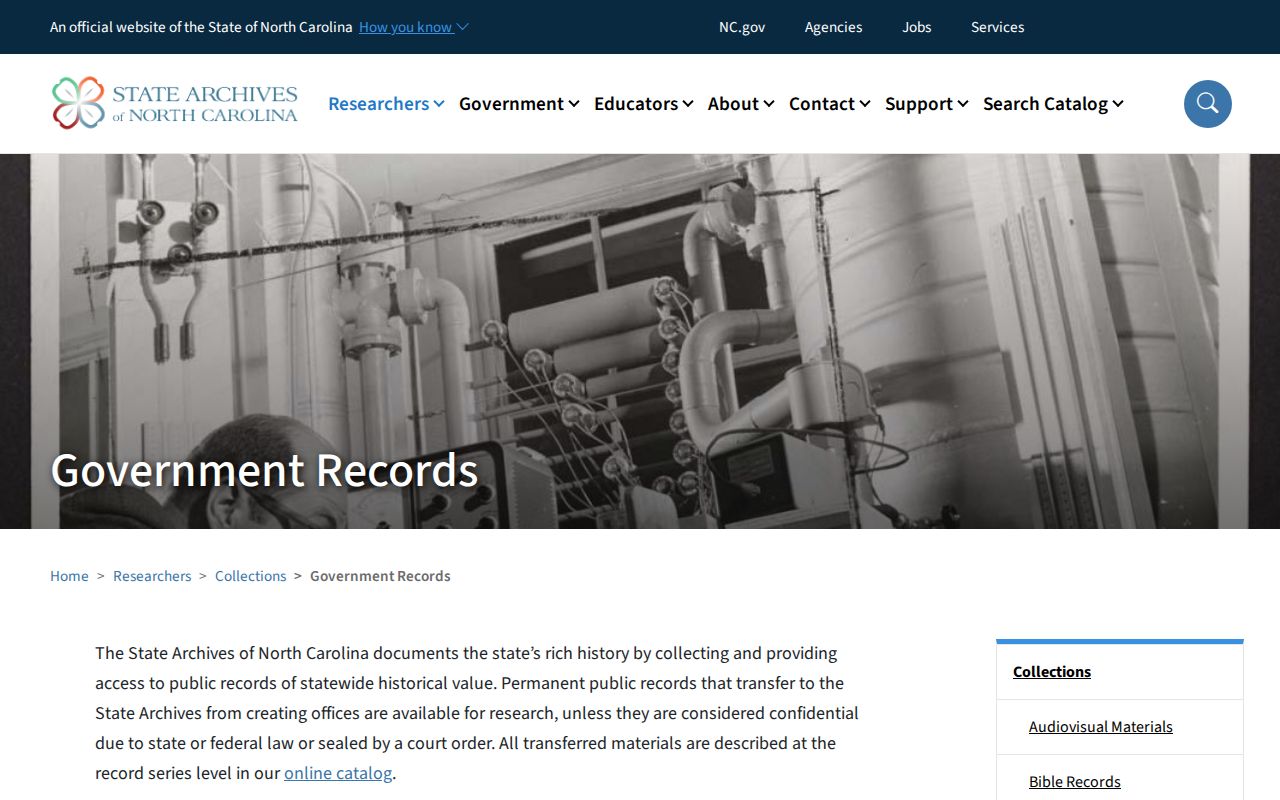
Search the archives and finding aids by Mecklenburg plus Matthews, Charlotte, Fullwood, or the historic street or community name.
Myth: Matthews Maps Name Households
Maps date a place or show a footprint; they do not name everyone who lived there. The Library of Congress has North Carolina Sanborn resources and digitized map tools, but the research did not verify a Matthews-specific sheet or any local years. Verify coverage with the Library of Congress, UNC Charlotte, or the library before promising a Sanborn answer for a Matthews address.
Permits are a different dated clue. Mecklenburg Code Enforcement states that six years of online document research covers certificates and permit applications. Older construction or alteration records require a public-record request, a plan archive or certificate search, or a Town or County counter inquiry. A permit can date work and name an applicant or contractor, but it does not establish a household.
Note: A map or permit should be paired with deeds and directory or census evidence before it is used to date a resident connection.
Matthews Past Residents Trail Endpoints
When a person disappears from an address trail, newspapers, funeral notices, cemeteries, and estate files can provide an endpoint. The Charlotte Observer Archive begins in 1888 and is available through library access, while library microfilm and local funeral notices are additional channels. Roseland Cemetery and church cemetery research can be important for historic Matthews, but an absent online cemetery entry is not evidence of absence.
Vital-record routing follows the event place. For an older North Carolina event, births before 1913 route to the county Register of Deeds where the birth occurred; deaths before 1930 route to the State Archives; marriages before 1962 route to the ROD where the license issued; and divorces before 1958 route to the Clerk where filed. Certified copies have statutory eligibility rules, so an index or archive route may be the appropriate historical alternative.
North Carolina Vital Records historical research guidance summarizes the statewide holdings and older-record routing.
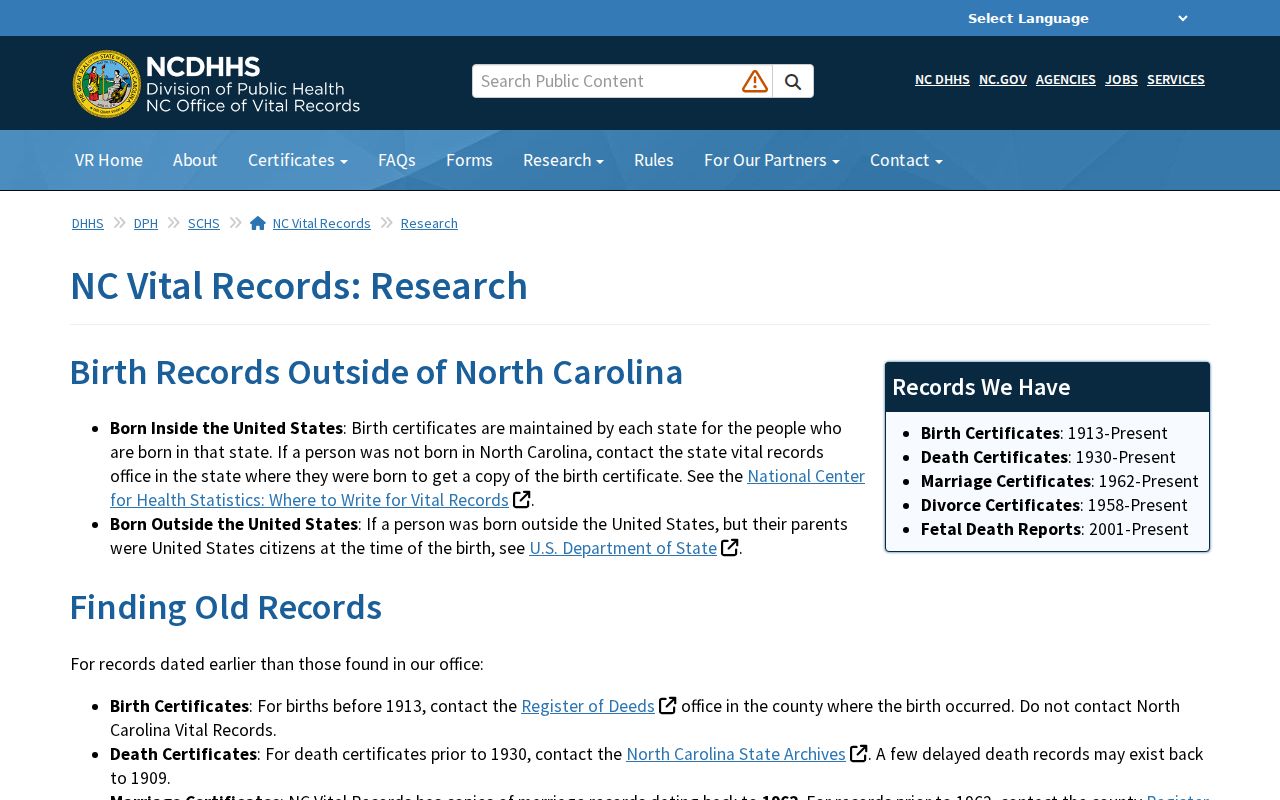
Use the event county and record type when choosing a custodian. A Matthews address by itself does not decide where a historical birth, death, marriage, or divorce record is held.
Lawful use. Matthews past-resident research is appropriate for house history, family history, estate questions, and personal curiosity. Public availability does not permit anyone to track, threaten, or harass a living person.