
Matthews City Directory Collections by Year
The verified Matthews city directory trail is a Charlotte-Mecklenburg shelf with distinct surviving examples, not a confirmed uninterrupted Matthews-only run. DigitalNC and UNC Charlotte holdings preserve early county context, while the Robinson-Spangler Carolina Room is the practical place to ask for annual volumes, telephone books, and reverse books. Keep the title, publisher, year, page, and abbreviation key with each result. That record makes it possible to revisit an entry when a surname or street label changes.
| Collection | Years | Where held | Access |
|---|---|---|---|
| Beasley & Emerson Charlotte directory | 1875-76 | DigitalNC / UNC Charlotte holdings | Digitized resident and classified directory |
| Charlotte directories | 1887-88 and 1896-97 | DigitalNC | PDFs with Mecklenburg and rail-era context |
| Walsh's Directory of the City of Charlotte | 1908 | DigitalNC / UNC Charlotte | Digitized, call no. F264.C4 A169 1908 |
| Charlotte City Directory and Hill's Charlotte | 1922 and 1935 | DigitalNC / UNC Charlotte | Digitized resident and business listings |
| Polk, Hill, telephone, and reverse volumes | Exact local run not located | Carolina Room shelves and catalog | Ask staff by publisher, year, and directory type |
No official source located a continuous Polk sequence or a definitive first or last Matthews-only directory. Treat unverified shelf gaps as gaps, rather than assuming every year was printed or that every town household was included.
Why Matthews Appears in Charlotte Directories
Matthews developed first as Stumptown and then Fullwood. After the Carolina Central Railroad arrived in 1874, mail used Matthews Station by 1875, and the town charter followed in 1879. That rail and county relationship explains why a Matthews family may surface in a Charlotte title, a township reference, or a county listing instead of a stand-alone town section. The 1896-97 directory's distance table places Matthews eleven miles away on the Seaboard Air Line route.
Myth: A Matthews city directory must have “Matthews” on the cover to be useful. The historical evidence points the other way. Search Matthews, Fullwood, Matthews Station, Tank Town, and Crestdale, along with surname and road variants. A county or Charlotte-area book can be the correct record context for a Matthews address.
The Town of Matthews history provides the Stumptown, Fullwood, railroad, and incorporation context. It is a useful check before deciding that an absent modern town label means the family was elsewhere.
The Town history record is shown here because its place-name sequence explains the labels that can appear beside a Matthews city directory entry.
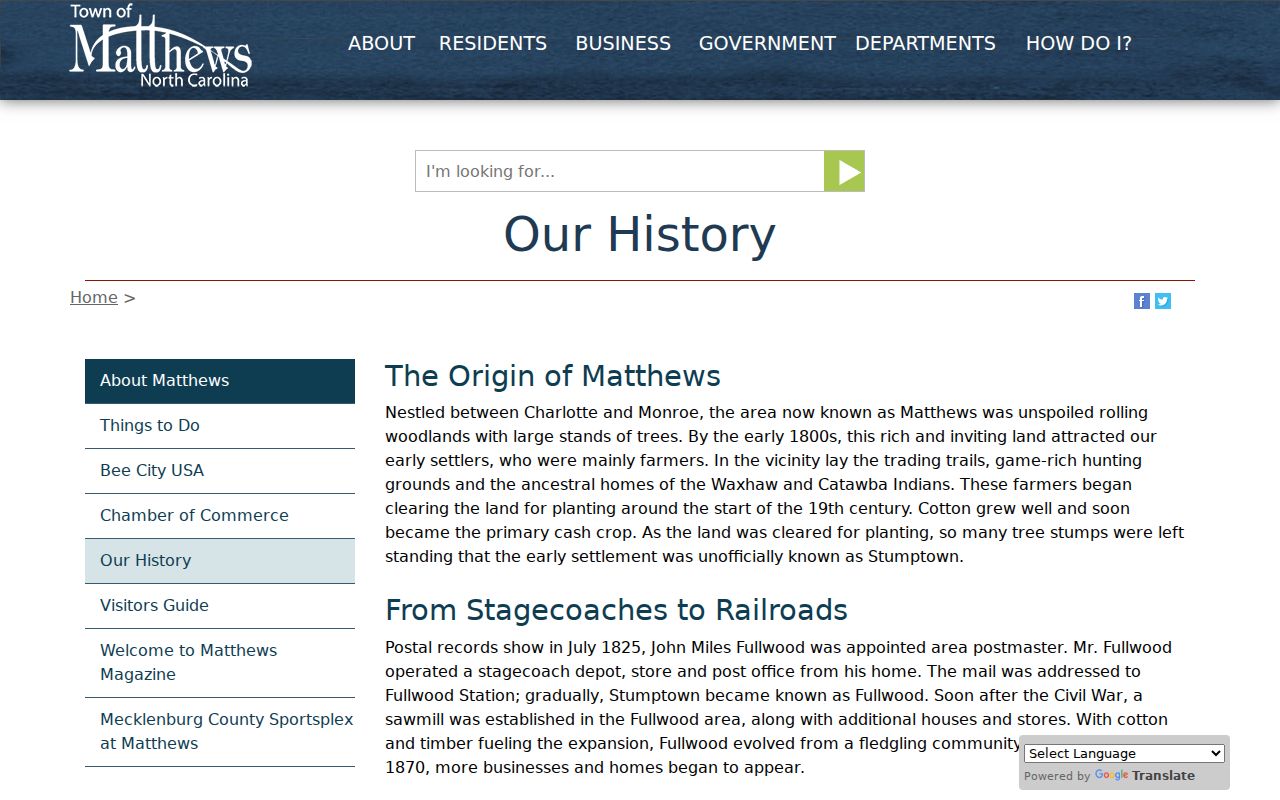
Use the sequence as a search list, not as proof that every historic address has a direct modern-number equivalent.
Matthews Historical Shelf Access
The Robinson-Spangler Carolina Room is the main public genealogy and local-history center for Matthews and Mecklenburg. Its collections include historical directories, county documents, newspapers, yearbooks, maps, vertical files, photographs, manuscripts, and family histories. Start at the local Matthews branch when that is convenient, then ask Carolina Room staff for non-circulating directory shelves or a staff-assisted surname and old-street search.
Several channels matter when a web search misses an entry. Vault is free online. The Charlotte Observer Archive, from 1888 to today, uses library-card access. Ancestry Library Edition requires library Wi-Fi or a public computer, and some FamilySearch Affiliate material requires the library network. HeritageQuest can supply census, family-history, local-history, tax, directory, land, and probate collections. Remote credential rules can vary, so contact the library before a special trip.
Room-specific hours and a stable room address were not exposed in the research. Confirm the current location, access rules, and whether the requested volume is on site before traveling. UNC Charlotte Special Collections and the North Carolina State Archives are appropriate repository fallbacks when a Carolina Room search cannot supply the needed item. For a difficult Matthews surname, ask staff to include family-name files, municipality archives, maps, photographs, and vertical files in the search, not only the directory title.
Charlotte Mecklenburg Library's house-history toolkit connects directories with deeds, plat maps, newspapers, and permits.
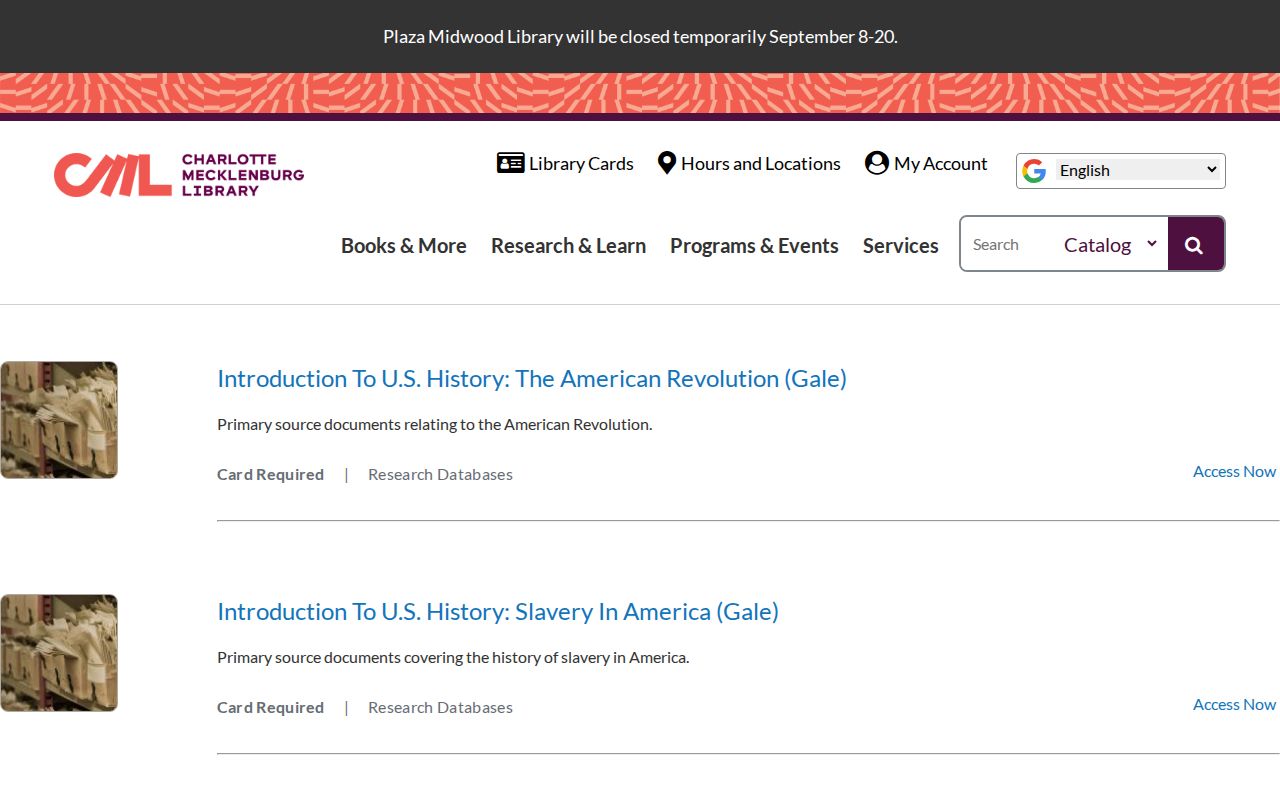
That combination helps keep a directory address in context without treating a periodically compiled listing as proof of title or present occupancy.
Matthews Digitized Directory Books
DigitalNC is the fastest route to the verified examples. Its 1908 Walsh directory record identifies W.H. Walsh Directory Co., the publication year, the call number, and a full PDF link. The 1935 Hill PDF preserves the alphabetical resident and business pages. The 1887-88, 1896-97, and 1922 items add civic, township, transport, or business context.
For records not yet digitized, search the FamilySearch catalog by place, keywords, title, author, subjects, or surnames. It also accepts call number or film, fiche, or image-group number. A catalog camera icon does not guarantee home viewing. Some images require an account, a FamilySearch Center, an Affiliate Library, or access permitted by the rights holder.
Download or note the page image rather than relying only on text extraction. Punctuation, initials, parenthetical spouses, and abbreviations often carry the value of a historical listing. The Hill material is described as Charlotte/Mecklenburg County and some sections can be constrained to city limits, so a missing Matthews name must be tested against the title's scope before it is treated as a negative finding.
Read Matthews Historical Listings
The inspected 1935 Hill's directory describes an alphabetical list of residents and businesses. A typical entry can give a surname and given name, a spouse in parentheses when supplied, occupation or employer, street address, and a telephone, rooming, or business indicator. The exact abbreviation key and a stable named Matthews sample were not exposed by the text-only inspection, so confirm the printed key on the PDF or volume before expanding a mark.
| Name | Spelling, initials, and the named person or business. |
|---|---|
| Spouse | A spouse may appear in parentheses, when the compiler supplied one. |
| Work detail | Occupation or employer can separate two people with the same name. |
| Address | Street, number, or another location clue used by the compiler. |
| Indicator | Telephone, rooming, or business notation where the volume provides it. |
- Criss-cross directory
- An address-organized directory section that can lead from a street location to an occupant clue.
- Householder index
- An index arranged around household or address information rather than only a simple surname list.
- Abbreviation key
- The volume's explanation of its shorthand. Photograph or transcribe it before drawing conclusions from a mark.
Directory compilers could omit children or some residents, use ownership or occupancy marks inconsistently, and lag behind a move. An entry is an index clue, not proof that a person owned the parcel or remained there after the book's compilation.
Matthews Reverse-Directory Gaps
Reverse, criss-cross, street, and householder books are valuable because they change the starting question from a name to an address. Their local existence and years were not located on an official page, however. Ask the Carolina Room for each term, photograph the title page and year, and record the publisher and call number before using a volume as coverage evidence.
The Matthews Heritage Trail is another local context source, especially for Crestdale and the community route from Town Hall and the library toward Four Mile Creek Greenway.
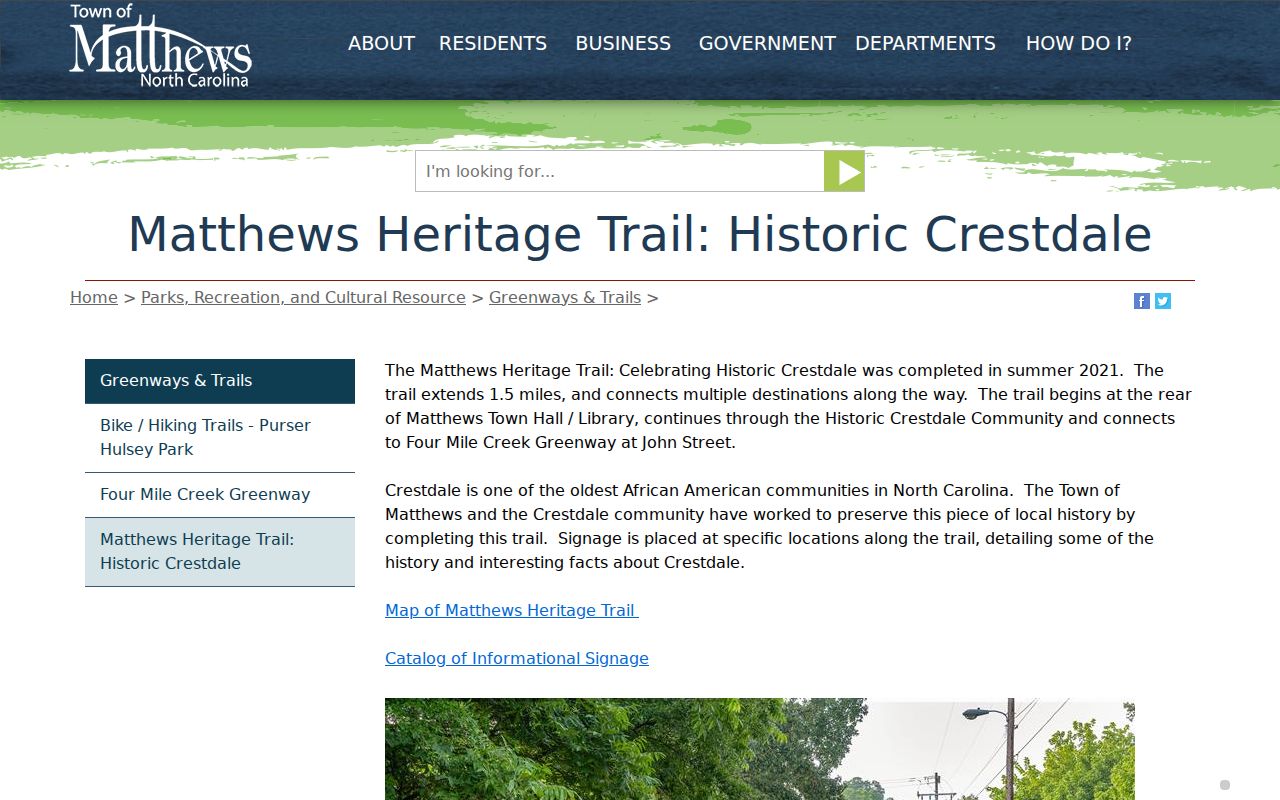
Trail and museum material can supply place names and community chronology, but it does not replace a directory volume, recorded deed, or census image.
Note: A missing reverse volume is a collection gap, not evidence that no household occupied the address in that year.
Trace Matthews Directory Households
Use the historical books as a dated sequence. Begin with the earliest verified surname or street result, preserve every spelling variation, and move forward or backward through the available years. A Matthews address may sit in a Charlotte-area volume even when the town was a distinct rail stop. Match the directory year to the closest federal census, then use the same road, occupation, spouse, and nearby names to decide whether two entries describe the same household.
- Record the exact directory title, year, page, spelling, address, and all abbreviations.
- Search the surname, old community names, and street variants in the next available directory, not an assumed annual run.
- Use a verified reverse or criss-cross section to move from address clue to alphabetic entry.
- Pair the result with the nearest open federal census: 1880, 1900, 1910, 1920, 1930, 1940, or 1950.
- Check newspapers, obituaries, church or cemetery material, probate files, yearbooks, and deeds for a separate confirmation.
Federal individual census records follow the 72-year rule. The public sequence reached 1950 in 2022, and 1960 individual records are expected to open in 2032. Pre-urban Matthews may be filed under a township, rural route, or an older postal name, so a census result should be read beside rail, deed, church, and directory evidence.
Matthews Directory Cross-Checks
When a listing disappears, the answer may be a move, death, omission, changed name, or changed address label. The Charlotte Observer Archive, library microfilm, local funeral notices, cemetery records, school yearbooks, church anniversary booklets, and Mecklenburg estate files can test those possibilities. Obituaries are secondary sources and may omit people, while private church rosters should not be treated as public directories.
For a historic address trail rather than a collection search, the Matthews past residents record trail connects directory clues to parcels, deeds, plats, and older record access. Keep an occupant separate from an owner and a voter. Each source answers a narrower question.
Note: Preserve the original spelling and punctuation from a directory before normalizing a name for later searches.